
Belgian wholesale electricity prices rose 17% in 2025. But with 518 hours of negative prices and weekend savings of 73%, smart charging has never been more valuable. Here’s what the data tells us.
1. Prices rose 17% - winter was the culprit
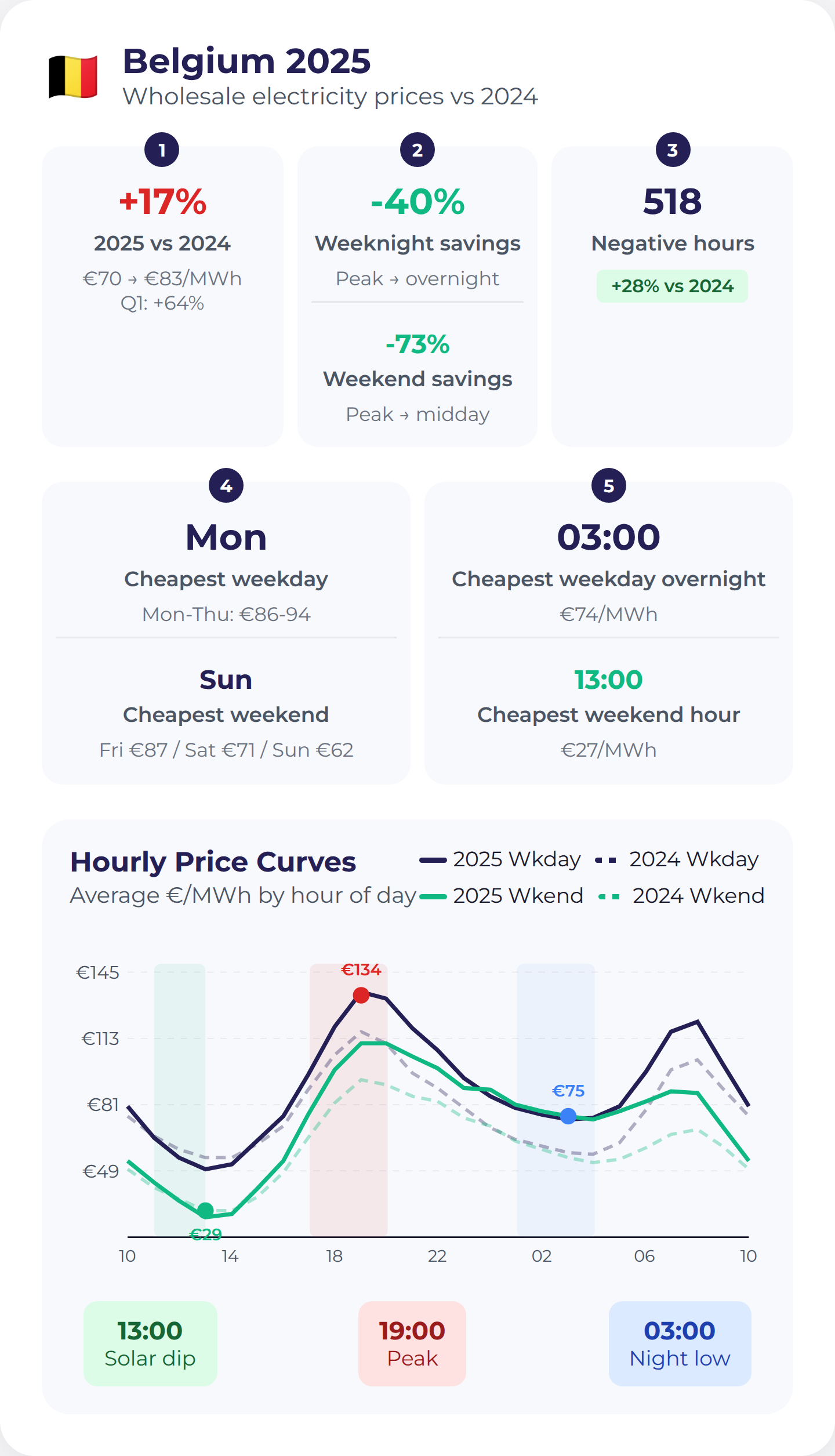
The average wholesale price climbed from €70 to €83/MWh. Like the rest of Western Europe, Belgium’s increase was concentrated in the winter months.
Q1 2025 was brutal: +47% compared to Q1 2024. Cold weather across Europe depleted gas storage, and Belgium’s reliance on imports during peak demand pushed prices to extremes. February 2025 was particularly painful.
But from April onwards, prices normalised. Summer 2025 was actually cheaper than summer 2024 in many hours, especially during sunny afternoons.
The takeaway: If you’re on a dynamic tariff, your winter bills were tough. But smart timing during the rest of the year could offset much of that increase.
2. Weekend savings of 73% - nearly free electricity
Belgium’s weekend midday prices have collapsed thanks to solar generation. Charging at 13:00 on weekends instead of the evening peak saves you 73%.
Weeknight savings are solid too at 40%, but the real opportunity is weekend daytime. When the sun is shining and demand is low, prices regularly go negative.
The pattern is nearly identical to the Netherlands: weekend midday beats overnight for the cheapest rates.
Gridio captures these opportunities automatically, shifting your charging to the cheapest windows based on real-time price data.
The takeaway: If you can charge on weekend afternoons - especially in spring and summer - you’ll access some of the cheapest electricity available anywhere.
3. 518 hours of negative prices
In 2025, wholesale prices went negative for 518 hours - up 28% from 2024. Only the Netherlands had more.
Belgium’s solar capacity has grown rapidly, and on sunny weekend afternoons the grid regularly has more power than it needs. Prices go negative, and dynamic tariff customers get paid to consume.
Most negative hours occur between March and September, peaking in May and June. Weekend afternoons are the sweet spot.
The takeaway: Dynamic tariffs aren’t just about avoiding peaks. They’re about catching the 500+ hours per year when electricity is free or better.
4. Monday and Sunday are your best days
Not all days are equal. Wholesale prices follow non-domestic energy use - offices, factories, commercial buildings - and that demand varies through the week.
Monday is the cheapest weekday in Belgium, before the week’s commercial activity reaches full speed. Wednesday tends to be the most expensive.
Sunday is the cheapest weekend day, when both commercial and household demand hit their weekly lows. Saturday is good too, but Sunday consistently edges it out.
The takeaway: Sunday is your ultimate charging day. If you can shift your main charging to Sunday afternoon, you’ll get the best rates of the week.
5. The best times to charge your EV
Let’s make it practical. Based on 2025 data, here’s when to charge:
Weekdays (plugged in overnight):
Prices are lowest around 03:00 at €77/MWh. The evening peak (19:00-21:00) averages €128/MWh, so avoiding it saves you 40%.
In summer, consider the late afternoon window too. 17:00-18:00 is often cheaper than midnight, before the evening peak hits.
Weekends (flexible all day):
Charge at 13:00 for the best rates - around €27/MWh, often negative in spring and summer. This is the standout opportunity in Belgium.
Morning (09:00-10:00) is also decent. Avoid late afternoon and evening when prices climb back up.
The hour to avoid at all costs: 19:00-21:00 on weekdays. Peak demand, peak price. Charging during dinner time costs nearly five times more than weekend midday.
The takeaway: Belgium’s pattern is clear: weekend midday is king. Target Sunday 13:00 for the absolute cheapest charging.
The bottom line
2025 saw Belgian prices rise, driven by an expensive winter. But the flip side is that solar is delivering more negative price hours than ever - 518 hours of free or better electricity.
The gap between smart and dumb charging is now 73% on weekends. If you’re still plugging in at 19:00 or ignoring weekend opportunities, you’re paying nearly five times more than you need to.
A dynamic tariff plus smart timing is the simplest upgrade you can make.
Charge smart. Charge cheap. Let the grid pay you when the sun is shining.
1. Prices rose 17% - winter was the culprit
The average wholesale price climbed from €70 to €83/MWh. Like the rest of Western Europe, Belgium’s increase was concentrated in the winter months.
Q1 2025 was brutal: +47% compared to Q1 2024. Cold weather across Europe depleted gas storage, and Belgium’s reliance on imports during peak demand pushed prices to extremes. February 2025 was particularly painful.
But from April onwards, prices normalised. Summer 2025 was actually cheaper than summer 2024 in many hours, especially during sunny afternoons.
The takeaway: If you’re on a dynamic tariff, your winter bills were tough. But smart timing during the rest of the year could offset much of that increase.
2. Weekend savings of 73% - nearly free electricity
Belgium’s weekend midday prices have collapsed thanks to solar generation. Charging at 13:00 on weekends instead of the evening peak saves you 73%.
Weeknight savings are solid too at 40%, but the real opportunity is weekend daytime. When the sun is shining and demand is low, prices regularly go negative.
The pattern is nearly identical to the Netherlands: weekend midday beats overnight for the cheapest rates.
Gridio captures these opportunities automatically, shifting your charging to the cheapest windows based on real-time price data.
The takeaway: If you can charge on weekend afternoons - especially in spring and summer - you’ll access some of the cheapest electricity available anywhere.
3. 518 hours of negative prices
In 2025, wholesale prices went negative for 518 hours - up 28% from 2024. Only the Netherlands had more.
Belgium’s solar capacity has grown rapidly, and on sunny weekend afternoons the grid regularly has more power than it needs. Prices go negative, and dynamic tariff customers get paid to consume.
Most negative hours occur between March and September, peaking in May and June. Weekend afternoons are the sweet spot.
The takeaway: Dynamic tariffs aren’t just about avoiding peaks. They’re about catching the 500+ hours per year when electricity is free or better.
4. Monday and Sunday are your best days
Not all days are equal. Wholesale prices follow non-domestic energy use - offices, factories, commercial buildings - and that demand varies through the week.
Monday is the cheapest weekday in Belgium, before the week’s commercial activity reaches full speed. Wednesday tends to be the most expensive.
Sunday is the cheapest weekend day, when both commercial and household demand hit their weekly lows. Saturday is good too, but Sunday consistently edges it out.
The takeaway: Sunday is your ultimate charging day. If you can shift your main charging to Sunday afternoon, you’ll get the best rates of the week.
5. The best times to charge your EV
Let’s make it practical. Based on 2025 data, here’s when to charge:
Weekdays (plugged in overnight):
Prices are lowest around 03:00 at €77/MWh. The evening peak (19:00-21:00) averages €128/MWh, so avoiding it saves you 40%.
In summer, consider the late afternoon window too. 17:00-18:00 is often cheaper than midnight, before the evening peak hits.
Weekends (flexible all day):
Charge at 13:00 for the best rates - around €27/MWh, often negative in spring and summer. This is the standout opportunity in Belgium.
Morning (09:00-10:00) is also decent. Avoid late afternoon and evening when prices climb back up.
The hour to avoid at all costs: 19:00-21:00 on weekdays. Peak demand, peak price. Charging during dinner time costs nearly five times more than weekend midday.
The takeaway: Belgium’s pattern is clear: weekend midday is king. Target Sunday 13:00 for the absolute cheapest charging.
The bottom line
2025 saw Belgian prices rise, driven by an expensive winter. But the flip side is that solar is delivering more negative price hours than ever - 518 hours of free or better electricity.
The gap between smart and dumb charging is now 73% on weekends. If you’re still plugging in at 19:00 or ignoring weekend opportunities, you’re paying nearly five times more than you need to.
A dynamic tariff plus smart timing is the simplest upgrade you can make.
Charge smart. Charge cheap. Let the grid pay you when the sun is shining.

