
Estonian wholesale electricity prices dropped 7% in 2025. And if you know when to charge, you can save even more - up to 64% compared to peak hours. Here’s what the data tells us.
1. Prices dropped 7% - bucking the European trend
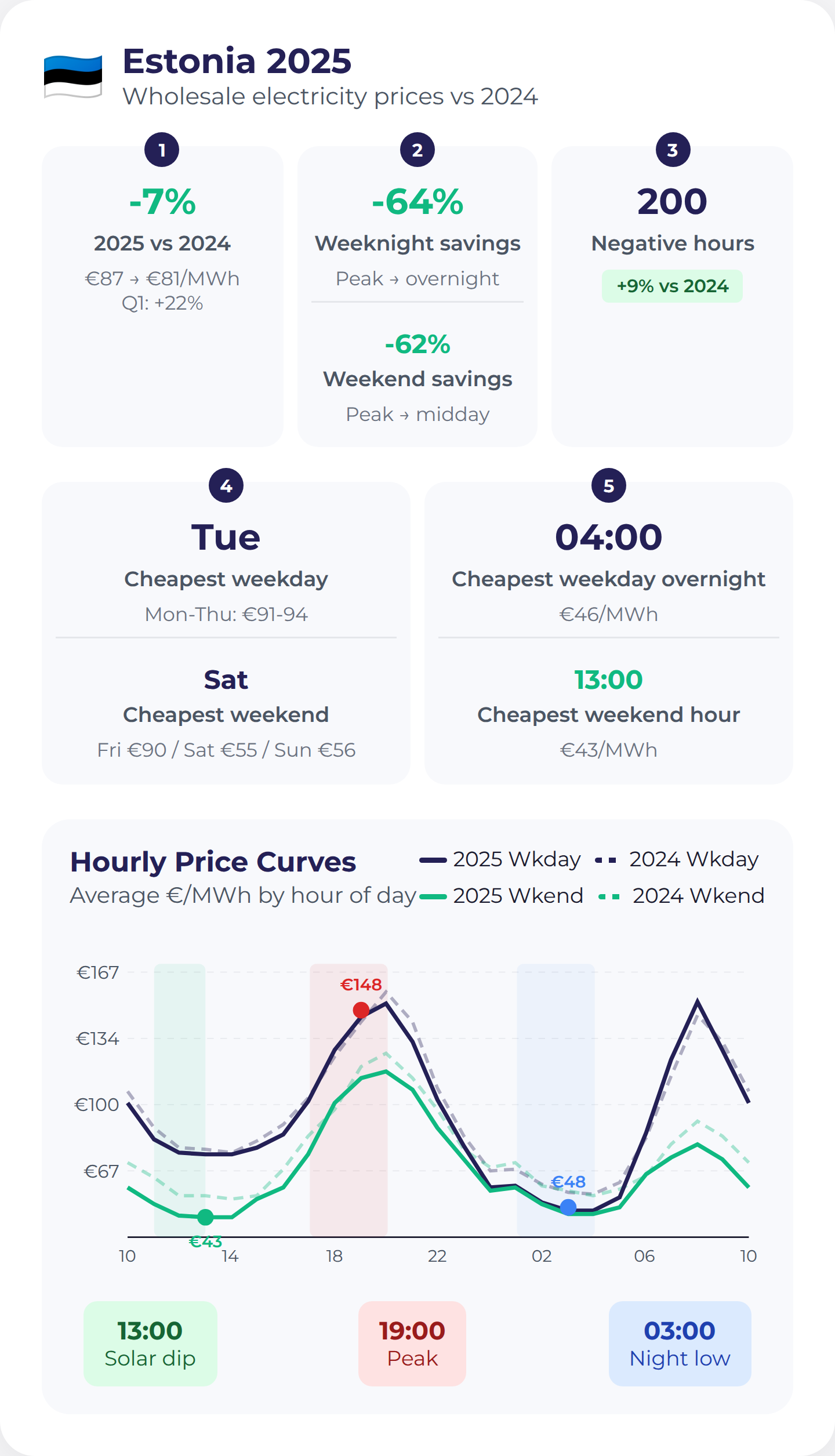
While most of Western Europe saw prices rise, Estonia’s average wholesale price fell from €87 to €81/MWh. That’s good news for EV drivers.
The improvement came from better interconnection with Nordic markets and reduced dependence on expensive gas generation. Q1 2025 still saw elevated prices (+25% vs Q1 2024), but the rest of the year more than made up for it.
The takeaway: If you’re on a dynamic tariff, your overall costs likely decreased compared to last year - especially if you avoided winter peak hours.
2. The solar duck curve is growing
Estonia isn’t known for abundant sunshine, but the European grid effect is real. When solar floods the continental market during midday, it pulls Baltic prices down too.
In 2025, the gap between peak and off-peak hours widened significantly. Charging at 04:00 instead of 20:00 now saves you 64%. On weekends, shifting to midday saves you 62%.
The problem? Most EVs are either plugged in immediately when you get home (around 19:00, one of the most expensive hours), or scheduled to start at midnight. Both miss the real opportunity.
Gridio handles this automatically by shifting your charging to the cheapest windows - whether that’s early morning on weekdays or midday on weekends.
The takeaway: The savings opportunity is massive and consistent - around 60%+ whether you’re optimising overnight or during weekend days.
3. 200 hours of negative prices
In 2025, wholesale prices went negative for 200 hours - up 9% from 2024. That’s moments when the grid literally pays you to consume electricity.
Most of these occurred during sunny weekend afternoons when solar generation across Europe exceeds demand. If you’re on a dynamic tariff that passes through wholesale prices, these hours mean free charging - or better.
The takeaway: Dynamic tariffs aren’t just about avoiding peaks anymore. They’re about catching the growing number of hours when electricity is free.
4. Tuesday and Saturday are your best days
Not all days are equal. Wholesale prices follow non-domestic energy use - offices, factories, commercial buildings - and that demand varies through the week.
Tuesday is the cheapest weekday in Estonia, as the week’s industrial ramp-up is still moderate. Prices rise through Wednesday and Thursday before easing on Friday.
Saturday is the cheapest weekend day, slightly edging out Sunday. Both are significantly cheaper than weekdays - the drop in commercial activity pulls prices down across the board.
The takeaway: If you can shift your main charging to Saturday, you’ll save significantly. Tuesday is your best bet for weekday top-ups.
5. The best times to charge your EV
Let’s make it practical. Based on 2025 data, here’s when to charge:
Weekdays (plugged in overnight):
Prices are lowest around 04:00 at €66/MWh. If you can schedule your car to start then instead of midnight, you’ll save an extra chunk. Avoid the evening peak entirely - 19:00-21:00 averages over €180/MWh.
Weekends (flexible all day):
Charge at 13:00 for the best rates - around €49/MWh. Morning is also decent, but avoid evening when prices climb back up.
The hour to avoid at all costs: 19:00-21:00 on weekdays. This is peak demand, peak price. Charging during dinner time is the most expensive choice you can make.
The takeaway: Smart charging isn’t complicated. Avoid the evening peak, target 04:00 for overnight, and use weekend midday when you can.
The bottom line
2025 was a good year for Estonian electricity prices. While Western Europe struggled with winter spikes, Estonia’s improved grid connections helped keep costs down.
The gap between cheap and expensive hours remains significant - over 60% savings are available for smart chargers. If you’re still charging on a flat tariff or plugging in whenever it’s convenient, you’re leaving money on the table.
A dynamic tariff plus smart timing is the simplest upgrade you can make.
Charge smart. Charge cheap.

