
Norwegian wholesale electricity prices in the NO1 zone (Oslo region) rose 38% in 2025 - a significant jump for a country used to cheap hydro power. But smart charging can still save you over 35%, and prices remain below most of Europe. Here’s what the data tells us.
1. Prices rose 38% - hydro conditions tightened
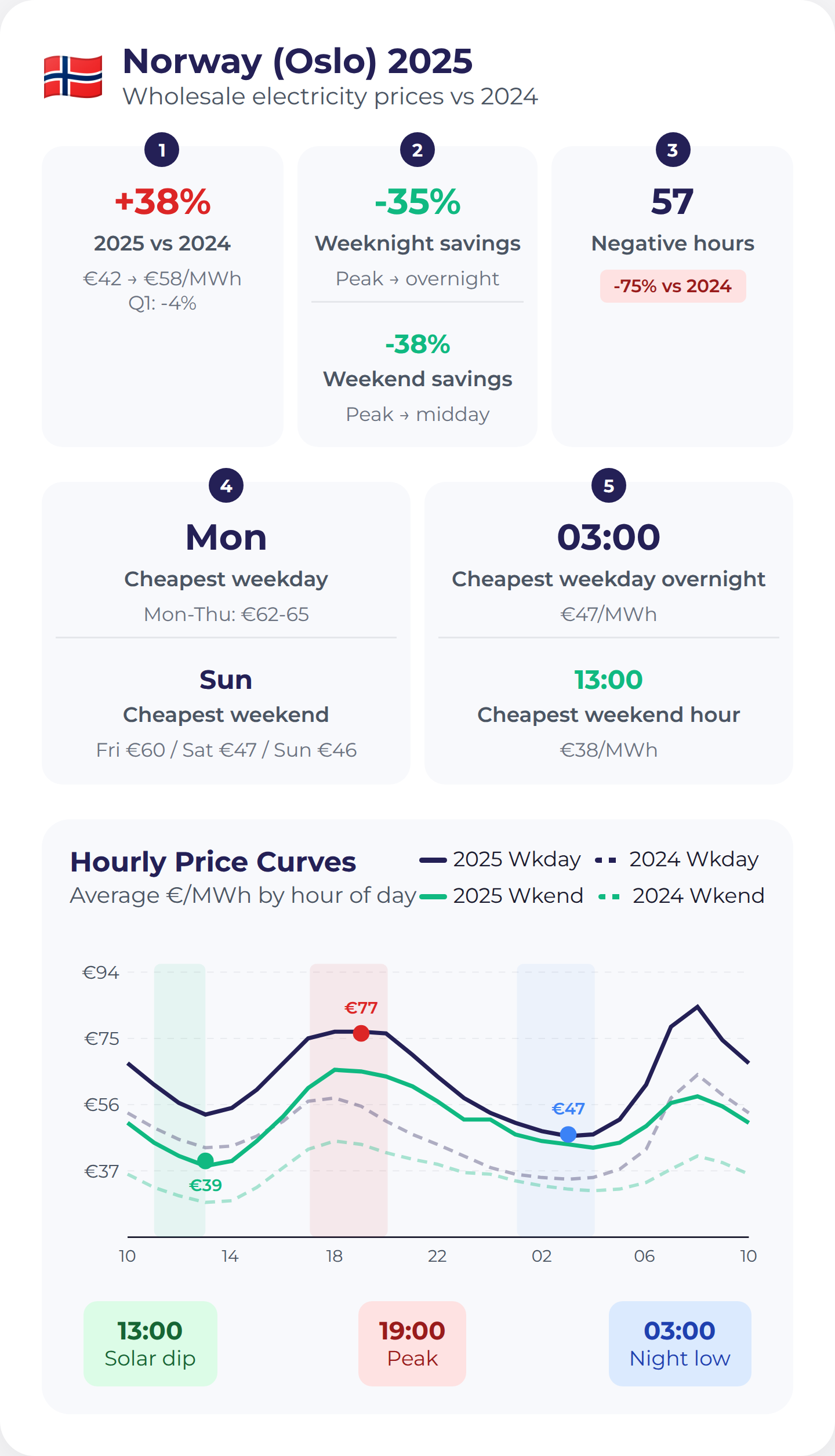
The NO1 zone saw average prices climb from €42 to €58/MWh. That’s a substantial increase, though Norway still has some of Europe’s cheapest electricity.
The rise came from tighter hydro conditions. Norway’s electricity system depends heavily on reservoir levels, and 2025 saw less favourable water conditions than previous years. When reservoirs are lower, prices rise.
Interestingly, Q1 2025 was actually slightly cheaper than Q1 2024 (-4%), bucking the European trend. The price increases came later in the year as reservoir levels tightened.
The takeaway: If you’re on a dynamic tariff, your bills increased compared to last year. But €58/MWh is still cheaper than most European markets - the Netherlands averaged €87/MWh.
2. 35-38% savings from smart timing
Norway’s price curve is flatter than more volatile markets, but meaningful savings are still available.
Charging at 03:00 instead of the evening peak saves you 35%. On weekends, shifting to midday saves you 38%.
These percentages are lower than Western Europe (where 50-70% savings are common), but they still add up over a year of charging. And as Norway’s grid connects more with continental Europe, price volatility is likely to increase.
Gridio captures these savings automatically, shifting your charging to the cheapest windows each day.
The takeaway: Norway’s savings are more modest than elsewhere, but still worth capturing. Every kWh shifted from peak to off-peak keeps money in your pocket.
3. Negative hours dropped 75% - a dramatic decline
In 2025, wholesale prices went negative for just 57 hours - down 75% from 2024’s 225 hours. This is the steepest decline in negative hours of any market we analysed.
The drop reflects the tighter supply situation. When hydro reservoirs are healthy, Norway often has surplus power to export, pushing prices negative. In 2025, that surplus was much smaller.
Negative hours still occur occasionally, typically during very windy periods or when demand is unusually low. But they’re rare now.
The takeaway: Don’t count on free electricity in Norway anymore. Focus on the consistent overnight and weekend savings instead.
4. Monday and Sunday are your best days
Not all days are equal. Wholesale prices follow non-domestic energy use - offices, factories, commercial buildings - and that demand varies through the week.
Monday is the cheapest weekday in the Oslo region, before the week’s commercial activity reaches full speed. Midweek (Tuesday-Thursday) tends to be more expensive.
Sunday is the cheapest weekend day, just edging out Saturday. Both weekend days are noticeably cheaper than weekdays - the weekend drop in commercial demand pulls prices down.
The takeaway: Sunday is your best charging day. Monday is the optimal weekday choice if you need a top-up.
5. The best times to charge your EV
Let’s make it practical. Based on 2025 data, here’s when to charge:
Weekdays (plugged in overnight):
Prices are lowest around 03:00 at €47/MWh. The evening peak (19:00-21:00) averages around €77/MWh. The gap is meaningful but not as dramatic as in other markets.
Norway’s flatter price curve means timing matters less than in volatile markets like Denmark or the Netherlands. But 03:00 is still consistently your best overnight bet.
Weekends (flexible all day):
Charge at 13:00 for the best rates - around €38/MWh. Weekend midday benefits from lower demand and, when conditions allow, surplus hydro generation.
The hour to avoid: 19:00-21:00 on weekdays remains the most expensive window, even in Norway. Prices are nearly double the weekend midday rate.
The takeaway: Target 03:00 for overnight charging and 13:00 on weekends. The savings are real, even if they’re smaller than elsewhere in Europe.
The bottom line
2025 was a more expensive year for Norwegian electricity, driven by tighter hydro conditions. Prices rose 38%, and negative price hours largely disappeared.
But context matters: €58/MWh is still cheap by European standards, and smart charging can save you over 35%. As Norway’s grid becomes more connected to continental Europe, price volatility will likely increase - making smart charging even more valuable.
A dynamic tariff plus smart timing is the simplest upgrade you can make.
Charge smart. Charge cheap.

